A-B-C Blog
Why Choose a Palletizer Machine for Your Business?
Choosing the right Palletizer Machine can reshape how products move through a busy warehouse. Boxes arrive in steady streams, operators guide fewer loads, and finished pallets leave the line with greater consistency. For manufacturers handling cartons, bags, cases, or containers, this equipment may reduce repetitive lifting and improve workplace organization.
A practical evaluation begins with the product itself. Case dimensions, weight, pallet patterns, line speed, and available floor space all affect machine selection. An experienced integrator will examine these details before recommending robotic or conventional palletizing equipment. The best system should also connect smoothly with conveyors, stretch wrappers, sensors, and existing control software. Small delays can become expensive bottlenecks.
Reliability matters more than impressive specifications. A durable Palletizer Machine needs accessible components, clear controls, strong guarding, and a maintenance plan that fits daily operations. Operators should understand changeovers and emergency procedures without guessing. It should fit your process.
Automation is not a magic solution. A poorly matched machine can create jams, difficult adjustments, and unexpected service costs. Businesses should compare total ownership expenses, including installation, training, energy use, spare parts, and downtime. Site testing or a realistic production trial can reveal problems that brochures hide. The decision deserves careful thought, because the fastest machine is not always the most useful one. When performance, safety, product protection, and long-term support are considered together, palletizing automation becomes a measured business investment rather than a rushed purchase.
What Is a Palletizer Machine?
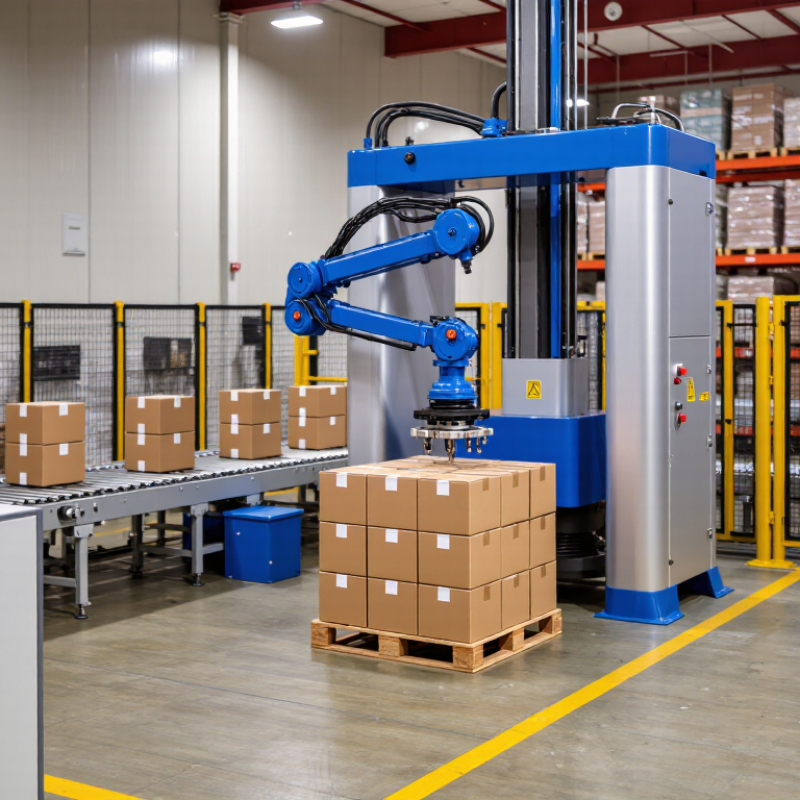
A palletizer machine is an automated system that stacks cartons, bags, or containers onto pallets. It follows programmed patterns to create stable, transport-ready loads. In a typical line, conveyors move products toward a robotic arm or layer-forming unit. The machine then places each item carefully, often adding sheets between layers.
Some palletizers handle one product at a time. Others arrange complete layers before transferring them onto a pallet. This difference affects speed, floor space, and maintenance needs.
A properly adjusted machine can reduce repetitive lifting and improve stacking consistency. Operators still monitor sensors, pallet positions, and product alignment during production.
Small errors matter.
A slightly damaged carton can disturb an entire layer. Dust may also affect sensors over time. Regular cleaning, inspection, and pattern testing are practical safeguards.
Safety guarding and emergency-stop controls should remain functional and accessible.
From an operations perspective, the best palletizer is not always the fastest model. It must match product weight, package shape, line speed, and available workspace. Otherwise, automation may create new delays instead of solving old ones.
How Does a Palletizer Machine Work?
A palletizer machine organizes products into stable loads for storage and transport.
It usually receives cartons, bags, or containers from a conveyor. Sensors detect each item’s position, size, and spacing. A programmable controller then directs the movement sequence.
The machine forms a planned layer on a pallet. Depending on the design, a robotic arm, gantry, or mechanical gripper places each product. Some systems rotate cartons to create an interlocking pattern.
This improves load stability and reduces empty spaces. A pallet dispenser supplies the next pallet when the current one is complete. The finished load may then move toward wrapping or storage.
The process looks simple.
In practice, product behavior matters. Soft packages can bend, while dusty cartons may slip during gripping. Operators usually test several patterns before selecting one. A pattern that works for one box may fail after a small size change.
Sensors, guards, and emergency stops also require routine checks. Experienced technicians inspect alignment, gripper wear, and conveyor timing during maintenance. These details often prevent sudden stoppages and damaged products. The first trial is rarely perfect, and that is useful. It reveals where the machine needs adjustment before regular production begins.
What Types of Palletizer Machines Are Available?
Businesses choose palletizer machines to improve consistency, reduce lifting injuries, and keep product flow steady. The right type depends on package weight, floor space, speed, and production changes. In real facilities, these details often matter more than impressive machine ratings.
Conventional layer palletizers suit high-volume lines with uniform cartons or bags. They build complete layers before placing them on a pallet. Robotic palletizers offer greater flexibility for mixed products, unusual shapes, and frequent changeovers.
A gantry palletizer works above the line, saving valuable floor space while handling larger loads. High-level systems support fast production, but they may require stronger structural planning. Low-level systems are easier to access and maintain, although their output can be lower.
Space matters. Errors still happen.
Tips: Review three production shifts, not just one. Measure package dimensions, pallet patterns, and required output during peak periods. Ask operators which adjustments consume the most time. Their experience can reveal issues that a specification sheet misses. Include safety guarding, inspection access, and future product changes in the evaluation. A machine that fits today may become restrictive after one new package size. Also, test sample products before purchase. Some flexible systems need more programming than expected, and that learning curve can affect the first weeks of operation.
What Business Benefits Does Palletizing Provide?
Palletizing gives businesses a practical way to improve daily warehouse performance. A palletizer machine places cartons in consistent patterns, reducing unstable loads and damaged products. On a busy line, it can handle repetitive lifting without slowing near the end of a shift. This consistency helps workers prepare safer pallets for storage and transport.
The labor benefit is also significant. Employees can spend less time stacking boxes and more time checking labels, inspecting products, or managing inventory. A machine may reduce physical strain, especially when cartons are heavy or handled continuously. It can also use floor space more efficiently by creating tighter, repeatable pallet patterns. Small gains matter here. A few extra cartons per pallet may reduce truck movements and storage costs over time.
Reliable performance depends on proper setup. Sensors, grippers, pallet patterns, and product dimensions must work together. Poor training or weak maintenance can quickly reduce those benefits. A palletizer is not an automatic solution for every operation. Irregular packaging may require adjustments, and the initial installation can interrupt production. Businesses should measure throughput, labor hours, product damage, and maintenance needs before choosing a system. That review may reveal an uncomfortable truth: faster stacking is not useful if the rest of the warehouse cannot keep pace.
Why Choose a Palletizer Machine for Your Business? - What Business Benefits Does Palletizing Provide?
| Business Dimension | Manual Palletizing | Machine Palletizing | Business Benefit | Practical Measurement |
|---|---|---|---|---|
| Palletizing speed | Limited by operator pace, fatigue, breaks, and product weight | Designed for repeatable, continuous cycles at a specified line rate | Supports higher and more consistent production output | Cases or bags per minute; pallets per shift |
| Labor utilization | Several workers may be required for repetitive stacking and repositioning | One operator can typically supervise the palletizing cell, depending on system design | Allows employees to focus on quality checks, material supply, and higher-value tasks | Labor hours per pallet and labor cost per shipped unit |
| Workplace ergonomics | Frequent lifting, bending, twisting, and reaching may be required | Automates repetitive lifting and stacking movements | Reduces exposure to manual-handling risks and improves job ergonomics | Manual lifts per hour, lifting distance, and ergonomic risk assessments |
| Load stability | Stack quality can vary with operator technique and fatigue | Programmable patterns provide repeatable placement and layer alignment | Helps reduce leaning loads, product damage, and shipment instability | Damaged cases, rework incidents, and load-quality inspection results |
| Product consistency | Pattern and orientation may vary between operators or shifts | Recipes can control layer patterns, product orientation, and pallet formats | Improves repeatability across shifts, products, and production orders | Pattern compliance, rejected pallets, and changeover accuracy |
| Space utilization | Manual stacking may not consistently use the best pattern for the pallet footprint | Configured patterns can optimize pallet area and product height within safe limits | May improve warehouse density and trailer or container utilization | Cases per pallet, pallet height, and cubic utilization percentage |
| Operational availability | Output is affected by absenteeism, turnover, fatigue, and staffing shortages | Can operate for extended scheduled periods with planned maintenance and supervision | Improves production planning and reduces dependence on manual staffing availability | Overall equipment effectiveness, downtime, and schedule attainment |
| Product flexibility | Changing formats may require retraining and manual pattern adjustments | Programmable recipes can support multiple products and pallet patterns | Makes it easier to manage product variety and repeatable changeovers | Number of recipes, changeover time, and products handled per shift |
| Quality and traceability | Manual errors can be difficult to identify consistently | Automated controls can integrate with sensors, scanners, conveyors, and production systems | Supports standardized handling and better process monitoring | Misplaced products, barcode exceptions, and quality-related stoppages |
| Return on investment | Lower initial equipment cost but potentially higher recurring labor and handling costs | Higher initial investment with costs for integration, maintenance, training, and safety controls | A business case can be evaluated using labor savings, throughput, damage reduction, and utilization gains | Payback period, total cost per pallet, and five-year lifecycle cost |
Note: Actual performance depends on product dimensions and weight, pallet specifications, required pattern, line speed, safety requirements, integration scope, and operating schedule. Business benefits should be validated through a site-specific feasibility and total-cost analysis.
How Should You Choose the Right Palletizer Machine?
Why Choose a Palletizer Machine for Your Business?
Choosing the right palletizer machine starts with your product, not its advertised speed. Review case dimensions, package strength, pallet patterns, and daily volume. The 2024 MHI Annual Industry Report found that 55% of supply chain leaders increased technology investment. Yet automation only pays when it matches real operating conditions. A machine rated for 1,200 cases per hour may struggle with unstable bags or frequent product changes. That gap is expensive.
Assess the full workflow before selecting equipment. Measure conveyor height, floor space, pallet access, stretch-wrapping needs, and operator movement. Robotic palletizers suit mixed products and frequent pattern changes. Conventional systems can provide stronger output for stable, high-volume lines. Check changeover time, gripper flexibility, safety functions, maintenance access, and local technical support. The PMMI 2023 report, The State of the Industry, identified labor availability as a major reason for packaging automation. However, reducing labor pressure should not mean ignoring training. That mistake remains common.
Tips: Request a live test using your actual cartons. Ask for verified throughput, not theoretical speed. Calculate energy, spare parts, software, and maintenance costs over five years. Leave expansion space around the machine. Also, challenge your own forecasts; seasonal demand can make a perfect-looking choice unsuitable later.
Related Posts
-
What Is a Palletizer Machine and How Does It Work?
-
What Is Palletizing Equipment?
-
Why Choose an Automatic Carton Sealing Machine for Your Packaging Needs
-
Navigating Tariff Challenges: How China's Best Robotic Palletizer Drives Global Supply Chain Growth
-
Crafting Excellence in Best Food Packaging Made in China for Global Markets
-

Exploring Packaging Innovation: Highlights from the Record-Breaking 137th Canton Fair