What is UVLED Flatbed Printing and How Does it Work?
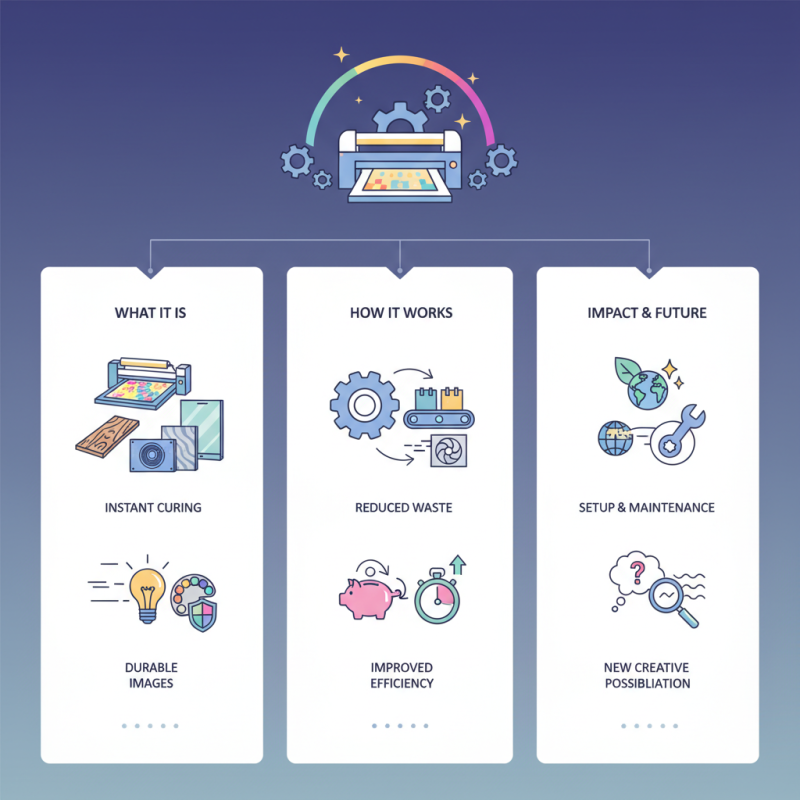
UVLED Flatbed Printing is revolutionizing the printing industry. Experts highlight its unique capability to print on diverse materials. As John Smith, a leading expert in the field, states, “UVLED technology opens doors to possibilities we never imagined.” This printing method uses ultraviolet light to cure ink instantly. It creates vibrant, durable images on various surfaces, from wood to metal.
The process of UVLED Flatbed Printing is fascinating. A flatbed printer allows for larger items, ensuring precision. The ink dries quickly, which enhances productivity. Businesses appreciate how this method reduces waste and improves efficiency. However, some challenges remain, such as the initial setup costs and maintenance.
Despite these hurdles, the advantages are clear. It supports eco-friendly practices by minimizing solvent use. As industries evolve, UVLED Flatbed Printing stands out, pushing the boundaries of creativity. Yet, some still question its long-term reliability in certain applications. This technology, while powerful, requires ongoing evaluation and adaptation.
What is UVLED Flatbed Printing?
UVLED flatbed printing is a modern printing technology that employs ultraviolet light to instantly cure or harden the ink as it is printed. This method allows for quick production cycles and versatility across various materials. According to a report by Smithers Pira, the UV printing market is projected to reach $9.3 billion by 2025. This growth reflects the increasing demand for high-quality prints in the industry.
The process of UVLED flatbed printing utilizes a flat surface to accommodate various substrates such as wood, metal, glass, and plastic. The printer emits UV light as the print head moves across the material. This curing process enables immediate handling of printed items, enhancing efficiency. However, operators must ensure proper calibration and maintenance of the equipment. Without this, print quality can suffer.
Notably, while UVLED printing is environmentally favored due to reduced VOC emissions, the technology is not without challenges. Some inks may not adhere well to all surfaces, leading to issues with durability. Furthermore, the initial investment for UVLED printers can be high. These factors require careful consideration by businesses before adoption.
What is UVLED Flatbed Printing and How Does it Work?
| Dimension | Details |
| Printing Technology | UV LED Flatbed Printing |
| Print Surface | Flat surfaces including wood, glass, plastic, and metal |
| Print Resolution | Up to 1440 dpi |
| Curing Process | UV LED light curing |
| Key Benefits | Quick drying, high adhesion, eco-friendly inks |
| Typical Applications | Signage, packaging, promotional items |
| Market Trends | Increasing demand for customization in printing |
Key Components of UVLED Flatbed Printers
UVLED flatbed printers are gaining popularity in various industries. They use ultraviolet light to cure inks as they are printed. This technology enables high-quality outputs on different surfaces. The core components of these printers include the print head, curing units, and control system.
The print head houses the nozzles that spray ink onto the substrate. It must be precise to achieve sharp images. Curing units follow the print head. They emit UV light, which instantly solidifies the ink. This not only enhances vibrancy but also ensures durability. The control system manages the entire printing process, allowing for adjustments and monitoring.
Tip: Proper maintenance of the print head is crucial. Clogged nozzles can lead to print defects. Regular cleaning will help maintain print quality.
Often, users overlook calibration. Ensuring accurate calibration is vital for consistent results. It can be time-consuming but pays off in the long run. Always test prints before running large jobs to avoid costly errors.
Tip: Keep an eye on the ink levels. Low ink can affect quality and lead to banding. Regular checks can prevent unexpected interruptions.
How UVLED Flatbed Printing Works Step-by-Step
UVLED flatbed printing is a transformative technology in the printing industry. It uses ultraviolet light to cure ink as it is printed. This process allows for high-quality prints on various surfaces. The machine applies UV ink directly onto materials like wood, glass, and metal. As the ink is printed, UV LEDs flash and harden it instantly. This method enhances efficiency and reduces drying times. In fact, industry reports estimate that UV flatbed printing will grow by over 25% annually over the next five years.
The operation of a UVLED flatbed printer involves several steps. Initially, the printer is loaded with the desired media. The ink nozzle system positions itself precisely over the surface. The printer then lays down the ink layer by layer. After each layer, the UV lights quickly cure the ink. This ensures vibrant colors and durable finishes. However, mistakes can occur, such as inconsistent ink distribution. Operators must monitor this process closely to ensure quality.
Maintaining the equipment is another critical aspect. Regular cleaning and calibration can prevent issues like ink clogging. Industry experts recommend checking the UV lamps frequently. Failing to do so can lead to less effective curing. According to a recent study, improper maintenance can decrease print quality by up to 15%. This highlights the importance of routine checks in achieving optimal results. Attention to detail is vital in mastering UVLED flatbed printing.
Applications and Benefits of UVLED Flatbed Printing
UVLED flatbed printing is a versatile technology. It allows printing on various surfaces, like wood, glass, and metal. This process uses UV light to cure the ink instantly. This capability leads to vibrant colors and sharp details. The applications are broad, spanning signage, packaging, and custom décor.
One key benefit is its eco-friendliness. UVLED inks have low VOC emissions. This means they are safer for the environment. Additionally, the prints are durable and resistant to fading. They can withstand various weather conditions.
Tip: Always test different substrates. Not every surface reacts the same way to UV ink. Some might require pre-treatment for better adhesion.
Another advantage is the printing speed. UVLED flatbed printers can produce high-quality outputs quickly. However, not all printers are made equal. They might work best with certain materials. Understanding the limitations can save time and frustration.
Tip: Regular maintenance is crucial. Keep the printer heads clean for optimal performance. A neglected printer can result in uneven prints.
In today's market, the demand for customization is high. UVLED flatbed printing meets this need effortlessly. It opens up possibilities for unique designs and personalized products.
Comparing UVLED Flatbed Printing with Traditional Methods
UVLED flatbed printing stands out in today's printing landscape. It utilizes ultraviolet light to cure inks instantly, offering benefits over traditional printing methods. Unlike solvent or water-based prints, UVLED technology uses less volatile organic compounds. This enhances environmental sustainability. In contrast, traditional methods often require longer drying times, increasing production schedules and costs.
When comparing UVLED with traditional printing, speed is a critical factor. UVLED printers can operate at higher speeds, allowing for swift turnaround on projects. Traditional printers, however, may struggle to keep up with tight deadlines. Plus, UVLED printing provides better quality on various surfaces, from wood to metal. The versatility enables businesses to expand their offerings.
**Tip**: Always consider the substrate you plan to use. Different surfaces require specific inks for optimal adhesion. Testing various materials ensures the best results.
Despite the advantages, UVLED printing does come with challenges. Initial costs may be higher for UVLED equipment. Maintenance and technical knowledge are also necessary. Traditional printing methods may appear easier for beginners. Understanding these factors can help make informed decisions.
**Tip**: Research and get hands-on experience. Talk to professionals who use UVLED technology. Their insights can guide your choices.
Comparison of UVLED Flatbed Printing and Traditional Methods
The above chart compares the longevity of prints produced by various printing technologies. UVLED flatbed printing offers superior durability compared to traditional methods like inkjet, screen, and offset printing.


