
A-B-C Blog

Top 10 Aluminium Blister Foil Suppliers Worldwide

Aluminium Blister Foil sits at the intersection of pharmaceutical safety, material science, and high-volume manufacturing. It protects tablets from moisture, oxygen, light, and handling damage. A weak seal can quietly compromise product quality. That detail matters.

Fortune Business Insights valued the global aluminium foil market at approximately USD 27.8 billion in 2023. Its report projects continued growth through 2032, supported by pharmaceutical and food-packaging demand. Grand View Research also identifies packaging as the leading application for aluminium foil worldwide. However, market estimates differ between studies. Definitions, regional coverage, and conversion assumptions are not always consistent. Readers should compare methods, not only headline figures.

“Aluminium foil packaging supports product protection while using relatively little material,” says Fiona Sweeney, Secretary General of the European Aluminium Foil Association. Her point reflects a practical industry reality: supplier quality depends on more than foil thickness. Alloy selection, temper control, pinhole testing, coating performance, printing accuracy, and sealing consistency all influence blister performance. Manufacturing experience remains visible in small details, such as clean edges and stable reel tension.

This guide examines ten leading Aluminium Blister Foil suppliers worldwide. It considers production capacity, pharmaceutical certifications, technical support, geographic reach, and documented quality systems. Company rankings are indicative, not absolute. A supplier may lead in coated foil but perform differently in tropical distribution or smaller custom orders. That limitation deserves attention. Procurement teams should verify current certificates, audit results, and batch data before making a final decision.
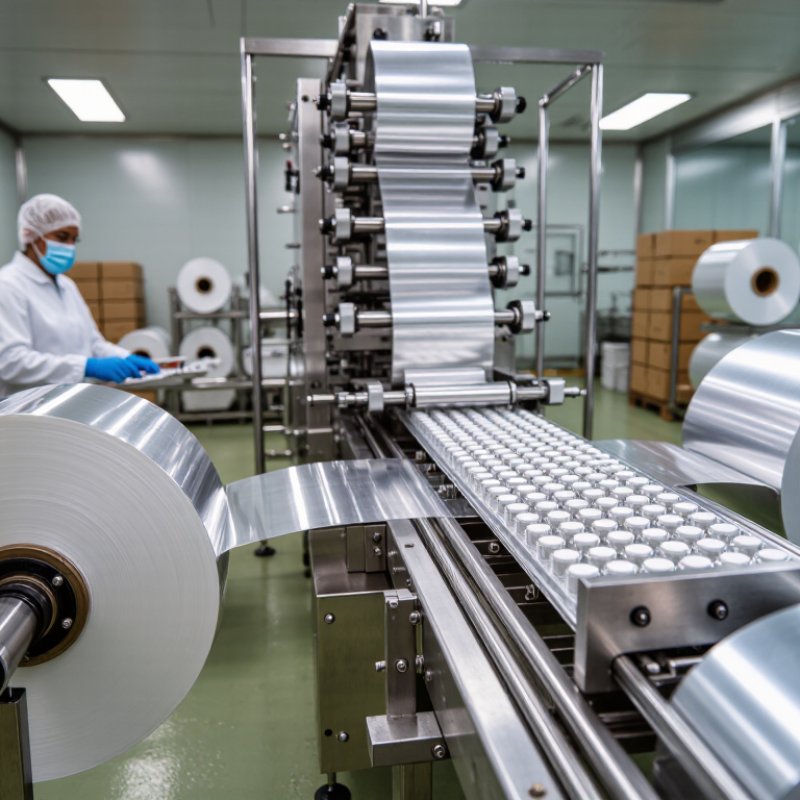
Top 10 Aluminium Blister Foil Suppliers Worldwide

Aluminium Blister Foil: Definition, Structure, and Key Uses

Aluminium blister foil is a thin lidding material used to seal individual doses. It usually contains a hard-temper aluminium layer, printed coating, primer, and heat-seal lacquer. The metal blocks light, moisture, oxygen, and outside odors. That barrier is not absolute. Pinholes, weak seals, or careless handling can reduce protection.

A practical structure often begins with aluminium foil around 20 microns thick, although the exact gauge depends on the pack design. The outer surface may carry ink and protective varnish. The inner surface uses heat-seal lacquer, which bonds with the forming web around each cavity. Seal performance depends on temperature, pressure, dwell time, and compatible materials. Small process changes matter.

The main use is pharmaceutical packaging for tablets and capsules. It also supports some healthcare and diagnostic products requiring clean, unit-dose protection. When comparing worldwide suppliers, buyers should review foil thickness, pinhole testing, coating weight, seal strength, dimensional accuracy, and batch traceability. Compliance documents and production controls are equally important. A supplier may provide attractive samples but inconsistent production batches. That risk is easy to overlook. Testing should reflect real packaging conditions, including humidity and storage temperature. In my view, the best specification is not always the thickest foil; it is the most reliable structure for the product, sealing process, and intended shelf life.

How the Top 10 Global Suppliers Are Selected

Selecting the top 10 aluminium blister foil suppliers requires more than comparing production volume. A credible review examines foil quality, manufacturing experience, and documented performance. Key checks include alloy consistency, thickness tolerance, pinhole control, surface cleanliness, and sealing strength. A 20-micrometre foil should remain stable across repeated production batches, not only in one laboratory sample.

Technical evidence carries greater weight than promotional claims. Supplier evaluations should review independent test reports, quality certificates, batch traceability, and factory audit records. Compliance with applicable packaging and product-safety requirements is essential. Auditors should also examine clean storage areas, calibrated gauges, moisture control, and how rejected rolls are handled. Small details matter. They often reveal process discipline.

The ranking can use a weighted score: product reliability, technical support, delivery performance, capacity, geographic service, and responsible manufacturing practices. Customer references may confirm whether delivery dates hold during urgent demand. However, public information is uneven, and some suppliers disclose limited production data. That weakens certainty. A fair list should record these gaps instead of treating every company as equally transparent. Scores should also be reviewed periodically because equipment, certifications, and lead times can change. The final selection reflects verified evidence, practical packaging needs, and consistent performance across markets, rather than reputation alone.

Top 10 Aluminium Blister Foil Suppliers Worldwide - How the Top 10 Global Suppliers Are Selected

No. Selection Dimension Weight Measurable Evaluation Data Preferred Benchmark for Global Suppliers Verification Source
1 Product Compliance 18% Conformity of aluminium blister foil with food-contact, pharmaceutical-packaging, and applicable regional requirements. Documented compliance with applicable requirements such as EU Regulation 1935/2004, EU GMP Regulation 2023/2006, or relevant U.S. FDA provisions. Declaration of compliance, test reports, customer audits
2 Dimensional Capability 14% Available foil thickness, web width, temper, alloy, roll diameter, winding direction, and slit-width tolerance. Commercial capability covering common blister-foil thickness ranges of approximately 0.020–0.050 mm, subject to product specification. Technical datasheets, certificates of analysis, sample inspection
3 Barrier Performance 14% Pinhole rate, coating integrity, resistance to moisture, oxygen, light, and chemical migration. Low-pinhole foil with barrier performance validated for the intended blister-packaging structure and pharmaceutical or food application. Pinhole testing, WVTR/OTR testing, migration testing
4 Coating and Printing Quality 12% Heat-seal lacquer uniformity, primer adhesion, print registration, ink resistance, and surface cleanliness. Consistent coating weight and adhesion across the production roll, with documented performance on the customer’s blister-sealing equipment. Coating-weight records, cross-hatch adhesion, seal-strength tests
5 Quality Management 10% Documented control of raw materials, process parameters, nonconforming product, corrective actions, and traceability. ISO 9001-certified quality management system or an equivalent independently audited system. Valid certificates, audit reports, batch records
6 Production Scale and Capacity 9% Annual output, number of converting lines, available production slots, minimum order quantity, and expansion capability. Capacity sufficient for repeat international orders, with contingency planning for equipment downtime and raw-material disruption. Capacity statements, production schedules, facility audits
7 Delivery and Global Logistics 8% Export experience, lead time, on-time delivery rate, packaging protection, port access, and documentation accuracy. Established export processes serving multiple geographic markets and stable delivery performance against agreed schedules. Shipment records, logistics KPIs, customer references
8 Sustainability Performance 6% Recycled-content options, energy use, emissions reporting, waste recovery, and environmental management practices. ISO 14001 certification or equivalent environmental controls, plus transparent sustainability data where available. ISO certificates, sustainability reports, material declarations
9 Technical Service and Customization 5% Ability to support artwork, coating selection, seal compatibility, tooling trials, troubleshooting, and product development. Dedicated technical support with documented trial procedures and response times for quality or production issues. Technical questionnaires, trial reports, service-level records
10 Commercial Competitiveness 4% Total landed cost, price stability, payment terms, tooling charges, claim handling, and contract flexibility. Competitive total cost supported by clear quotations, transparent specifications, and commercially sustainable supply terms. Competitive quotations, contracts, cost comparisons
Total Selection Weight 100% Suppliers can be ranked by multiplying each verified score by the corresponding weight and summing the results.

Evaluation principle: only suppliers that pass essential product-compliance, traceability, and quality requirements should be considered for the final global ranking.

Profiles of the Top 10 Aluminium Blister Foil Suppliers

Profiles of the Top 10 Aluminium Blister Foil Suppliers

The ten supplier profiles focus on measurable performance, not publicity. Leading producers usually combine aluminium rolling, pharmaceutical coating, printing, and slitting under controlled conditions. Their products commonly support 20–30 micron lidding foil, heat-seal coatings, and high pinhole resistance. Supplier capability matters more than catalogue size. Public data varies.

Recent Grand View Research reporting forecasts a mid-single-digit annual growth rate for global pharmaceutical packaging through 2030. Smithers also identifies healthcare packaging as a resilient demand segment in its global packaging outlook. These figures explain the growing supplier base, but they do not prove equal quality. The strongest profiles show validated seal strength, coating uniformity, batch traceability, and documented change control. ISO 15378 certification can support confidence, although certification alone is not enough. A converter’s audit history, laboratory controls, and response time deserve equal attention.

Tips: Ask for recent certificates of analysis, migration testing, and sample rolls before approval. Check foil thickness across the full roll, not only one cut piece. Review defect limits, minimum order quantities, and realistic lead times. WHO reports that one in ten medical products in low- and middle-income countries may be substandard or falsified, making packaging integrity a serious risk-control issue. A supplier may offer a low price. That can hide waste, delays, or weak technical support.

Quality Standards, Production Capacity, and Product Comparison

Top 10 Aluminium Blister Foil Suppliers Worldwide: Quality Standards, Production Capacity, and Product Comparison

Comparing the top ten aluminium blister foil suppliers requires more than checking catalogue prices. Experienced buyers examine foil thickness, pinhole levels, coating adhesion, and sealing performance. Common pharmaceutical grades range from 20 to 30 microns, although exact specifications depend on the blister structure. ISO 15378 certification can indicate controlled packaging production, while GMP-based procedures support cleaner manufacturing environments. Certificates alone are not enough.

Production capacity also affects supply reliability. A supplier with multiple rolling, printing, coating, and slitting lines may handle large annual volumes more consistently. Ask about monthly output, minimum order quantities, spare-line availability, and average lead times. A realistic supplier should provide batch traceability and retain samples for investigation. Capacity alone misleads. Some large facilities still struggle with urgent custom orders.

Product comparison should include primer quality, heat-seal coating, ink resistance, and cut-edge cleanliness. Printed foil may offer strong branding control, but unprinted foil often simplifies validation and reduces lead time. Cold-forming compatibility matters when higher barrier protection is required. During assessment, request recent test data for tensile strength, coating weight, seal strength, and visual defects. A small sample roll can reveal wrinkles, uneven color, or weak seals. I would also compare complaint response times, not only laboratory results. That part is often overlooked. No supplier performs perfectly, so transparent corrective-action records deserve serious attention.

How to Choose an Aluminium Blister Foil Supplier for Your Needs

Choosing an aluminium blister foil supplier starts with the product’s barrier needs, not a colorful sales brochure. Ask for the foil alloy, thickness tolerance, temper, and pinhole limits. A dependable supplier should provide recent certificates of analysis, batch traceability, and controlled sampling procedures. Request samples matching your forming and sealing conditions. Small differences matter.

Check whether the supplier’s quality system covers incoming materials, coating, printing, slitting, and final inspection. Audit records should show calibration dates, rejected-batch handling, and corrective actions, rather than polished promises. For coated foil, test seal strength, ink adhesion, chemical resistance, and legibility after storage. Do not rely on one laboratory result. Independent verification can expose pinholes or weak seals after heat and humidity cycling.

Commercial details deserve equal attention. Confirm minimum order quantities, lead times, emergency capacity, packaging protection, and shipment documentation. A supplier may offer excellent foil but struggle with small, changing orders. That mismatch becomes expensive. Discuss technical support before signing a contract. Can engineers explain forming failures, curl, or uneven coating without blaming your equipment? Compare total cost, not only price per kilogram. Freight, scrap, testing, and delayed production can change the calculation. My selection habits are not perfect; I once gave too much weight to delivery speed. A broader review should examine process consistency across several batches. Ask difficult questions early.

Top 10 Aluminium Blister Foil Suppliers Worldwide: Key Specification Reference

When comparing aluminium blister foil suppliers, thickness and basis weight are essential specification points. The chart shows the theoretical aluminium mass per square metre for commonly specified foil thicknesses, calculated using aluminium density of 2.70 g/cm³.

Calculation: basis weight (g/m²) = foil thickness (μm) × 2.70. Actual supplied weight may vary slightly because of coatings, primers, printing inks, laminates, and manufacturing tolerances.