A-B-C Blog
How to Choose the Best Modular Trade Show Booth?
Choosing the right Modular Trade Show Booth starts with evidence, not glossy renderings. UFI’s Global Exhibition Barometer consistently identifies exhibitions as important platforms for business recovery, relationship building, and lead generation. CEIR’s reports also show that exhibitors must measure more than booth traffic. Qualified conversations, sales opportunities, and follow-up quality matter more.
A practical booth should survive real conditions. Imagine a 10-by-20-foot space, two staff members, rolling cases, uneven lighting, and a crowded aisle. Can the structure assemble quickly? Can graphics be replaced without rebuilding the frame? Can visitors enter naturally? These questions expose weaknesses that attractive drawings often hide.
Trade show consultant Barry Siskind offers a useful reminder: “Exhibiting is not a spectator sport.” His point applies directly to Modular Trade Show Booth planning. The system should support demonstrations, conversations, storage, and measurable visitor action. Aluminum frames, tension fabric graphics, integrated lighting, and reusable counters can reduce transport volume and simplify future adaptations. However, modular does not automatically mean sustainable or cost-effective. Poorly chosen hardware can create extra shipping, storage, and replacement expenses.
This guide examines booth size, portability, visual impact, durability, accessibility, and lifecycle value. It also considers overlooked details, including cable management, setup labor, and graphic replacement time. No single configuration fits every exhibitor. The best decision may still require revision after one event. That is normal. Careful testing creates a stronger investment.
Define Your Trade Show Goals and Space Requirements
How to Choose the Best Modular Trade Show Booth?
Define your trade show goals before selecting a modular booth. A booth designed for product demonstrations needs open sightlines, stable counters, and accessible power. A lead-generation booth needs a clear welcome point, small meeting areas, and fast badge scanning. CEIR reports that 81% of trade show attendees hold buying authority. That makes visitor quality more important than raw foot traffic. Set measurable targets, such as 40 qualified leads, 12 product demonstrations, or three scheduled sales meetings.
Measure the assigned space carefully. Record the frontage, depth, ceiling height, utility points, fire exits, and neighboring exhibits. A 10-by-20-foot space can feel crowded after adding storage, chairs, lighting, and staff movement. Keep the main aisle visually open. Visitors should understand your offer within a few seconds. The Freeman Trends Report 2024 found that 74% of attendees value in-person events for discovering new products and services. Use that expectation to shape the layout, not merely the graphics.
Leave room for real behavior. Staff may gather near the entrance, boxes may appear, and visitors may ask longer questions than expected. We often plan for ideal traffic. That is a mistake. Test the booth layout with tape on the floor before production. Track expected lead quality, dwell time, and meeting capacity. A smaller booth with deliberate circulation can outperform a larger display with poor access. Recheck every assumption. Your first plan may look efficient, but live events rarely behave perfectly.
Compare Modular Booth Types, Layouts, and Configuration Options
Choosing the best modular trade show booth starts with comparing its structure, not its graphics. Panel systems offer clean walls, simple assembly, and controlled costs. Frame systems feel lighter and support fabric graphics, shelving, and suspended signs. Hybrid booths combine rigid panels with aluminum frames for a more customized appearance. Portable kits are practical for frequent events, but they may provide less storage and visual impact.
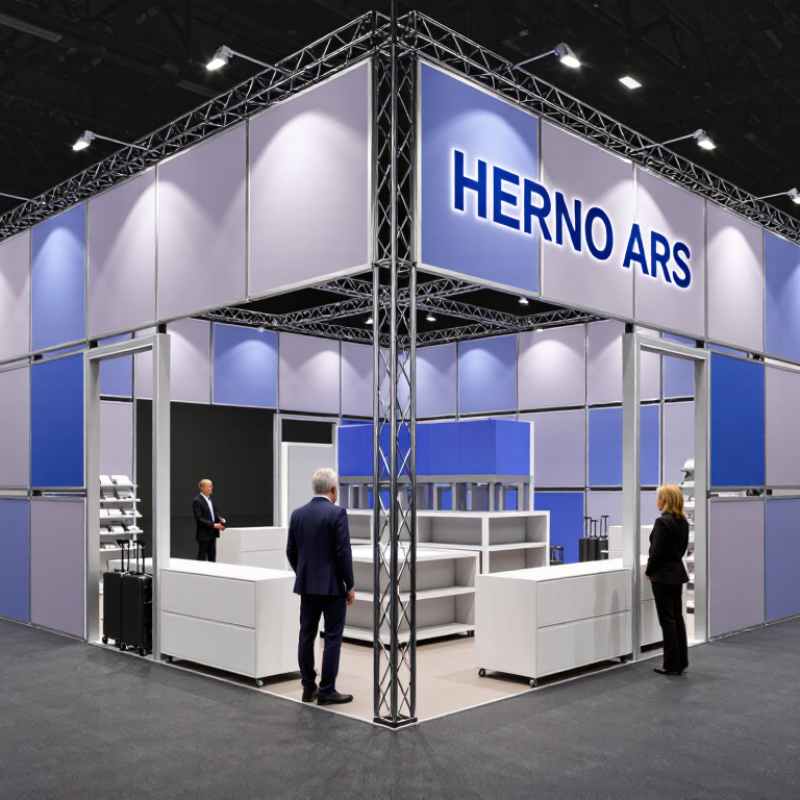
Layout changes how visitors move through the space. An inline booth works well when the exhibit has one open side and limited floor area. A corner layout creates two visitor entrances and improves visibility from busy aisles. Peninsula booths offer three open sides, while island booths provide access from every direction. Island designs need stronger planning for storage, lighting, demonstrations, and staff movement. Empty space matters. Too many counters can make a booth feel crowded.
Configuration should match the visitor journey. Place a welcome counter near the aisle, then guide guests toward product displays or a small meeting area. Use lockable storage for literature, personal items, and equipment. In my experience, hidden storage is often underestimated. A booth can look polished, yet staff may struggle when supplies spill behind the graphics. Check ceiling heights, electrical access, setup time, and transport limits before ordering. One mistake is assuming every modular component fits every venue. Measure twice. A flexible design may cost more initially, but it can adapt to smaller spaces, new messages, and changing event goals.
How to Choose the Best Modular Trade Show Booth? – Compare Modular Booth Types, Layouts, and Configuration Options
| Modular Booth Type | Typical Footprint | Recommended Layout | Configuration Options | Typical Setup Time | Portability | Reusability | Best Use Case |
|---|---|---|---|---|---|---|---|
| Inline Modular Booth | 10 ft × 10 ft Approximately 9.3 m² | Open-front layout with a rear display wall, reception counter, and compact meeting area. | Backlit graphics Shelving Monitor mount Storage counter | About 2–6 hours with a trained team | ★★★★☆ | ★★★★★ | First-time exhibitors, product displays, and standard inline spaces. |
| Corner Modular Booth | 10 ft × 10 ft or 10 ft × 20 ft Approximately 9.3–18.6 m² | Two open sides with a visible corner tower, angled reception desk, or central product zone. | Two-sided graphics Corner tower Demo counter Lockable storage | About 3–8 hours with a trained team | ★★★★☆ | ★★★★★ | Improved aisle visibility and higher visitor access than a standard inline booth. |
| Peninsula Modular Booth | 10 ft × 20 ft or 20 ft × 20 ft Approximately 18.6–37.2 m² | Three open sides with a rear feature wall, central demonstration zone, and semi-private meeting space. | Hanging signage Product theater Meeting pods Raised platform | About 4–10 hours with a trained team | ★★★☆☆ | ★★★★★ | Brands requiring strong visibility, product demonstrations, and several visitor pathways. |
| Island Modular Booth | 20 ft × 20 ft or larger Approximately 37.2 m² or more | Four-sided open layout with a central brand feature, multiple interaction zones, and perimeter storage. | Hanging sign Private conference room Large LED wall Product stations | About 1–2 working days, depending on complexity | ★★☆☆☆ | ★★★★★ | Large-scale launches, high visitor volumes, and multi-function exhibit programs. |
| Backwall and Counter System | 6 ft–20 ft wide Approximately 1.7–5.6 m wide | Single-wall presentation with a front-facing counter and optional literature or monitor area. | Fabric graphic Rollable counter Monitor shelf Literature holder | About 30 minutes–2 hours | ★★★★★ | ★★★★☆ | Small events, tabletop exhibits, sponsorship areas, and limited shipping budgets. |
| Portable Pop-Up Modular Booth | 8 ft–20 ft wide Approximately 2.4–6.1 m wide | Simple straight or curved wall with a reception counter and optional side panels. | Collapsible frame Magnetic graphics Spotlights Carry case | About 20–60 minutes | ★★★★★ | ★★★★☆ | Frequent travel, regional events, training sessions, and quick-turn installations. |
| Hybrid Modular Booth | 10 ft × 20 ft to 20 ft × 30 ft Approximately 18.6–55.7 m² | Combination of framed graphics, fabric structures, counters, meeting rooms, and open demo areas. | Mixed materials LED displays Storage wall Meeting room | About 6 hours–2 working days | ★★★☆☆ | ★★★★★ | Exhibitors balancing premium presentation, flexible reuse, and varied event footprints. |
| Double-Decker Modular Booth | Typically 20 ft × 20 ft or larger Subject to venue regulations | Ground-level exhibit area with an elevated meeting, hospitality, or storage level. | Upper lounge Stair access Large graphics Hospitality zone | Several working days, subject to engineering approval | ★☆☆☆☆ | ★★★★☆ | High-impact exhibitions where additional meeting capacity and vertical branding are priorities. |
Evaluate Materials, Durability, Portability, and Reusability
How to Choose the Best Modular Trade Show Booth?
A modular trade show booth should survive repeated assembly, transport, and storage. Start with the frame material. Aluminum is lightweight, corrosion-resistant, and easy to handle during busy setup days. Steel offers greater strength, but it adds weight and can increase shipping costs. Fabric graphics should have tight stitching, clean color reproduction, and washable surfaces. Thin panels may look attractive at first, yet they can dent after several events.
Durability is more than a strong frame. Check connector quality, hinge movement, wheel strength, and replacement access. Ask whether one damaged panel can be replaced without discarding the entire structure. From practical setup experience, unclear instructions often cause more damage than weak materials. Portability matters too. Measure packed cases, doorways, elevators, and vehicle space before ordering. A booth that needs three people to move may slow installation and raise labor costs. Reusability improves value when the layout can adapt to different spaces. Adjustable shelves, interchangeable graphics, and flexible lighting help the booth remain useful. Still, modular systems are not automatically sustainable. Frequent graphic replacement and excessive packaging can reduce that advantage.
Tips: Test it before the event. Assemble the booth with the actual team. Measure setup time, case weight, and storage space. Inspect every fastener after disassembly. Keep a small repair kit nearby. Record what failed, even if it seemed minor. Next season, those notes may influence a better design.
Assess Branding, Graphics, Lighting, and Visitor Engagement Features
How to Choose the Best Modular Trade Show Booth?
Branding should be visible before visitors reach your space. Use one clear message, strong contrast, and graphics readable from the aisle. CEIR research reports that 81% of trade show attendees influence buying decisions. Your booth should help them understand your offer quickly. Avoid filling every panel with text. A large product image, a short claim, and one useful proof point often work better.
Lighting changes how people judge quality. Aim light at graphics, product details, and conversation areas, not visitors’ eyes. Neutral white lighting usually preserves accurate colors, although warmer light can create a more welcoming atmosphere. UFI’s Global Exhibition Barometer tracks visitor quality and business outcomes, reminding exhibitors that appearance must support measurable conversations. Add a counter, demo screen, or sample station that encourages a natural pause.
Visitor engagement needs structure, not noise. Train staff to ask specific questions, then record answers consistently. A simple lead form should capture need, timing, and next action. Keep the path open for wheelchairs and avoid blocking the aisle with furniture. I once saw a beautifully lit booth lose attention because its demo took eight minutes. That was too long. Modular systems make changes easier, but flexibility can become clutter. Test the layout with real staff, review visitor movement, and remove anything that does not support a useful conversation.
Review Budget, Installation Needs, Storage, and Supplier Support
A modular trade show booth should fit your budget beyond the initial purchase price. Begin with a complete cost sheet covering graphics, lighting, flooring, transport, labor, and replacement parts. Ask whether the quoted price includes setup support and future adjustments. I have seen exhibitors choose a low-cost frame, then spend more on missing hardware and urgent shipping. The cheapest quote can mislead.
Installation needs deserve practical testing. Request clear assembly drawings, labeled components, and a realistic setup time. If two staff members must build the booth, let them practice before the event. A five-minute video rarely explains every awkward connection. Check venue rules for height, electrical access, fire safety, and permitted materials. Small oversights can delay opening.
Storage also affects the design. Measure the packed cases, not only the displayed booth. Confirm their weight, stacking limits, and protection against moisture. A compact system may save warehouse space, but fragile graphics can create repeated replacement costs. Supplier support should include spare-part availability, technical guidance, delivery tracking, and written warranty terms. Request references from exhibitors with similar booth sizes and schedules. Reliable suppliers answer specific questions without avoiding uncomfortable details. I still review every packing list twice, because human mistakes happen. That habit is not elegant, but it prevents expensive surprises.
How to Choose the Best Modular Trade Show Booth?
Common booth footprints help compare space requirements before reviewing budget, installation needs, storage capacity, and supplier support. Floor areas are calculated from the listed booth dimensions.
Planning note: A 10 × 10 ft booth provides 100 sq ft, while a 20 × 30 ft booth provides 600 sq ft. Larger footprints usually require more hardware, shipping space, installation labor, and storage capacity, so confirm these requirements with the supplier before selecting a system.