2026 Top Cold Rolled Coil Manufacturer for Global Buyers?
Choosing the right Cold Rolled Coil Manufacturer in 2026 requires more than comparing prices or production volume. Global buyers need measurable consistency, responsive communication, and evidence of stable quality.
John Ferriola, former Nucor chairman and chief executive, once said, “Steel is the backbone of our economy.” His words remain relevant when evaluating suppliers for automotive panels, appliances, construction components, and precision fabrication. A dependable manufacturer should demonstrate tight thickness control, clean surface finish, reliable mechanical properties, and suitable annealing or temper-rolling processes. Small variations matter. A rough edge can interrupt a stamping line. An uneven coil can create costly rejection.
This guide examines leading manufacturers through practical buyer criteria. These include mill capacity, grade availability, inspection systems, packaging strength, export experience, and delivery performance. Certificates help, but they do not tell the whole story. Buyers should review test reports, production samples, claim procedures, and customer references before signing a long-term agreement. Traceability is equally important, especially when coils move through several ports and warehouses.
No ranking is perfect.
Market conditions change quickly. Energy costs, raw-material supply, freight congestion, and regional trade requirements can alter a supplier’s position within months. Therefore, the best Cold Rolled Coil Manufacturer is not always the largest producer. It may be the supplier that answers clearly, corrects mistakes quickly, and keeps every coil identifiable from mill to delivery. That standard is less glamorous, but often more useful.
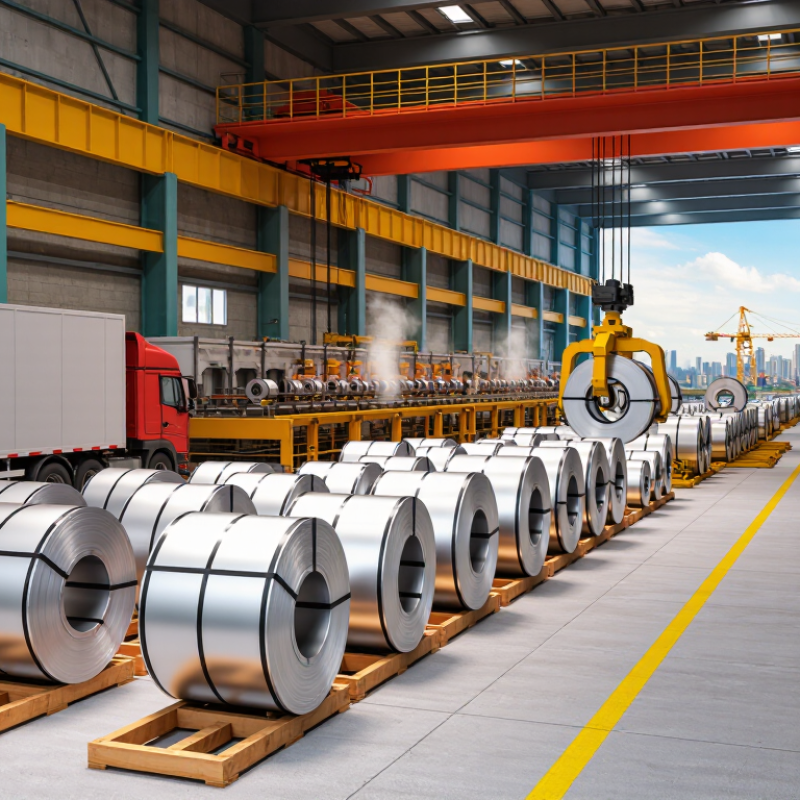
What Defines a Leading Cold Rolled Coil Manufacturer in 2026
A leading cold rolled coil manufacturer in 2026 must offer more than attractive pricing. Global buyers need stable quality across repeated shipments. That starts with controlled steel chemistry, accurate rolling, and dependable annealing. Thickness tolerance should remain consistent from the coil head to its tail. Small variations can disrupt stamping lines and increase scrap.
Surface quality also deserves close attention. Buyers should inspect roughness, flatness, edge condition, and visible defects. Practical manufacturers provide mill test certificates, heat numbers, inspection records, and clear traceability. Digital production data can make claims easier to verify. It should not replace physical testing. Samples still matter.
Reliable delivery is another defining measure. A strong supplier confirms production capacity before accepting an order. It communicates delays early and protects packaging during ocean transport. Moisture-resistant wrapping, firm strapping, and suitable loading prevent avoidable damage. Experience shows that paperwork errors can delay good steel for days. That problem is often underestimated.
Environmental performance is becoming part of technical evaluation. Buyers may request energy data, recycled content, and responsible water management. However, vague sustainability language should invite questions. Certificates help, but they are not perfect proof. Factory audits, independent tests, and responsive technical support create stronger confidence. No manufacturer avoids every mistake. What matters is whether its process detects problems, explains them honestly, and prevents repetition.
What Defines a Leading Cold Rolled Coil Manufacturer in 2026?
Maximum yield strength specified for common EN 10130 cold-rolled steel grades
A leading cold rolled coil manufacturer should consistently meet recognized material standards while offering a broad grade range for automotive, appliance, construction, and precision forming applications. The values shown are the maximum yield-strength requirements for selected grades under EN 10130; lower-strength grades generally provide better formability for deep-drawing applications.
Reference: EN 10130, Cold rolled low carbon steel flat products for cold forming.
How Manufacturers Control Quality, Precision, and Surface Performance
A reliable cold rolled coil manufacturer treats quality as a connected process, not a final inspection. The World Steel Association reported 1.89 billion tonnes of global crude steel production in 2023. At that scale, small process deviations can create costly width, gauge, and surface defects.
Control begins with chemistry checks and slab temperature records. Descaling removes oxide before tandem rolling starts. Automated gauges then track thickness across the strip. For example, a 0.02 mm drift can affect stamping performance in thin-gauge applications.
Operators also monitor rolling force, coolant cleanliness, and roll wear. The data matters.
Annealing restores ductility, while temper rolling improves shape and surface consistency. Surface roughness is measured in micrometres, not by visual judgment alone. Inspectors examine oil marks, scratches, pits, and edge cracks under controlled lighting. Independent testing should verify tensile strength, elongation, hardness, and dimensional tolerance against the agreed standard. ISO 6892-1 provides a recognized method for tensile testing metallic materials.
Energy control also influences manufacturing reliability. The International Energy Agency estimates that iron and steel production creates about 8% of global energy-related carbon dioxide emissions. Cleaner, stable heating can support both efficiency and repeatable mechanical properties.
Still, no mill is flawless. Gauge calibration can lapse, and surface ratings may differ between laboratories. Buyers should request coil-level inspection records, retained samples, and traceable corrective-action reports before approving large shipments.
How International Buyers Compare and Select the Right Manufacturer
2026 Top Cold Rolled Coil Manufacturer for Global Buyers?
International buyers compare manufacturers beyond the lowest quotation. They examine steel grade, thickness tolerance, surface finish, coil weight, and delivery consistency. A reliable manufacturer should provide recent mill test certificates, clear inspection records, and traceable production data. Ask whether the stated tolerance matches your forming process. Small deviations can create serious waste during stamping.
Factory experience matters. Buyers should review production lines, annealing controls, skin-pass equipment, and warehouse conditions. Photos help, but an independent inspection offers stronger evidence. Request samples cut from actual production coils. Test hardness, flatness, tensile strength, and surface quality through an accredited laboratory. Do not rely only on a polished sample.
Communication reveals operational maturity. Can the manufacturer explain lead times, packaging methods, loading plans, and claim procedures clearly? A practical supplier confirms coil direction, inner diameter, edge condition, and moisture protection before shipment. Low prices attract attention, but inconsistent quality may cost more through rejected batches and delayed production. No checklist is perfect. One weakness remains easy to miss: a factory may pass technical checks yet struggle with urgent changes. Buyers should test responsiveness before signing a long-term agreement. Clear records, realistic promises, and repeatable quality usually matter more than impressive sales language.


